
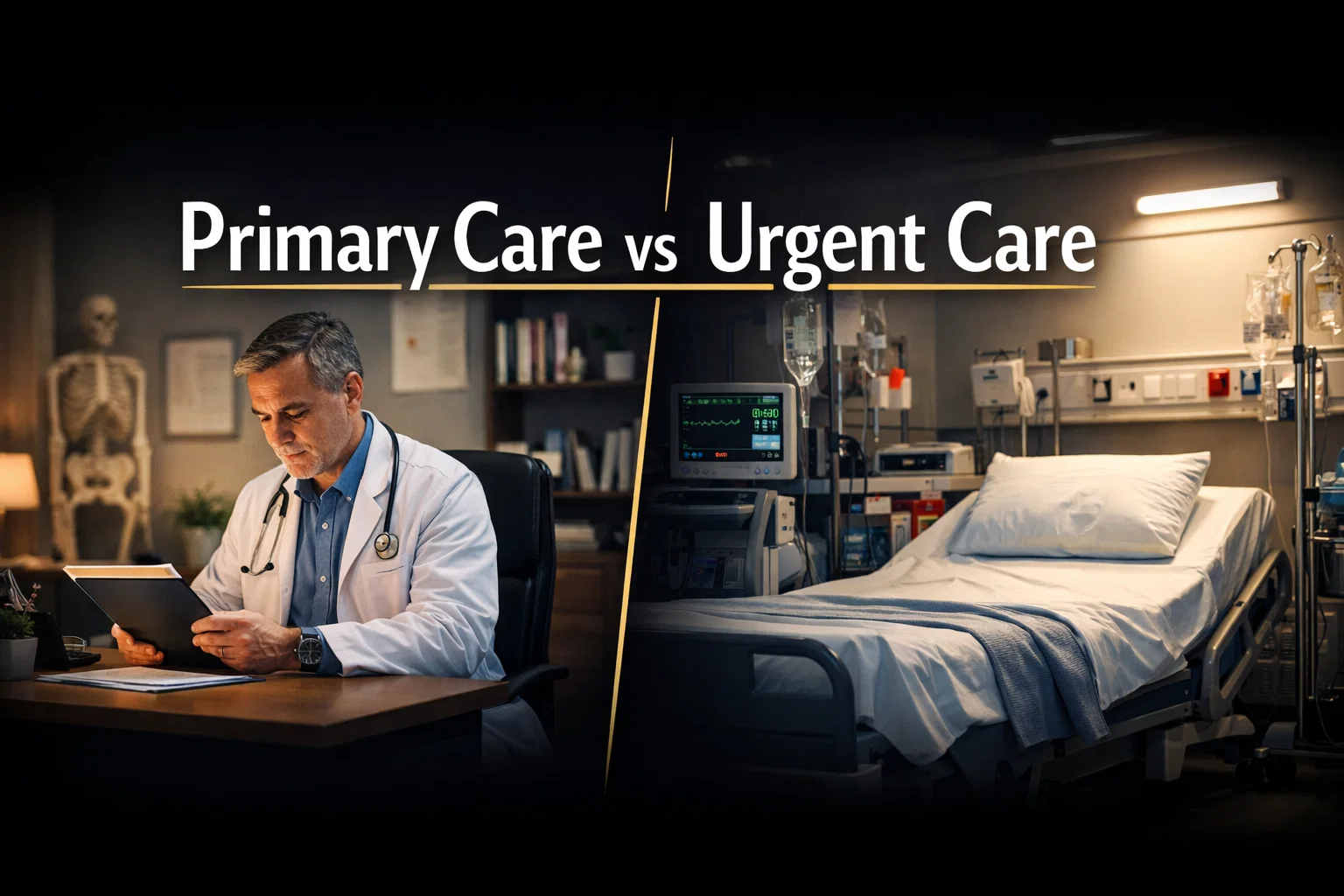
Primary Care vs Urgent Care: What’s the Difference and When to Go
Choosing between Primary Care vs Urgent Care is a decision that every individual will eventually face. The healthcare system requires people to understand how to find appropriate medical help based on their current health situation and the specific time of their symptoms.
The first option establishes your permanent health path through continual health evaluations and disease prevention activities. On the other hand, the second option delivers essential medical support during unexpected health emergencies that happen before and after standard medical facility open hours.
The correct decision enables you to obtain suitable medical treatment, which accelerates your healing process. This guide explains how these two services differ from each other, enabling you to handle your health needs with complete assurance.
What Is Primary Care?
Primary care establishes the essential foundation for maintaining good health because it includes your continuous medical relationship with a dedicated healthcare professional. This is especially important when it comes to primary care for adults and families, where consistent, long-term care supports both individual and household health needs. This isn’t just about treating a cough; it is about having a provider who understands your entire medical history, from your family genetics to your personal health goals.
The Role of Long-Term Health Management
A primary care provider (PCP) focuses on the big picture. They track your health over years, identifying subtle changes that might otherwise go unnoticed, which is why choosing the right family medicine provider plays an important role in long-term health management.
- The continuous medical treatment system functions as an essential element which helps patients with chronic health problems.
- Furthermore, patients find that their medical transitions become easier to handle when they have a permanent healthcare facility which serves as their primary medical contact point.
Preventative Services and Screenings
The prevention aspect of this model represents its most critical element.
- Routine check-ups, vaccinations, and age-appropriate screenings (like blood work or mammograms) happen here.
- Primary care identifies health risks at an early stage which results in reduced requirement for advanced medical treatment.
At LIV MED, we emphasize these proactive measures to keep our community healthy and thriving.
What Is Urgent Care?
Urgent care facilities are designed to handle “convenience medicine.” These clinics are the bridge between your regular doctor’s office and the emergency room. The medical facilities possess necessary resources to treat non-critical medical conditions which patients need to see within the next 24 hours.
Immediate Access and Extended Hours
The hallmark of urgent care is accessibility. Most clinics offer walk-in services and stay open late or on weekends when your regular physician might be closed. These medical facilities provide optimal treatment for unexpected Sunday fevers and for minor athletic injuries which occur after normal business hours.
Acute Treatment Capabilities
Urgent care centers possess necessary resources which enable them to perform basic medical procedures on-site. This includes:
- Suturing small lacerations
- Splinting minor fractures
- Performing rapid tests for strep throat and the flu.
Naturally, they prioritize speed and efficiency to get you back on your feet quickly.
Key Differences Between Primary Care and Urgent Care
When comparing primary care vs urgent care, the main distinctions lie in the depth of the relationship and the speed of the service. While both offer high-quality medical expertise, the context of the visit changes how care is delivered.
Scope of Practice and Equipment
- Primary care offices exist to provide medical consultations which develop into long-lasting treatment programs.
- Urgent care facilities exist to deliver immediate medical assessment services.
- Urgent care centers contain X-ray machines and laboratory testing facilities which produce instant test findings.
- On the other hand, your primary care physician will send you to an imaging center for advanced diagnostics.
Cost and Insurance Considerations
Additionally, a visit to a primary care provider involves a lower co-pay than an urgent care visit. Because urgent care provides “on-demand” service, the billing reflects that convenience. However, both are significantly more affordable than a trip to the ER.
| Feature | Primary Care | Urgent Care |
|---|---|---|
| Best For | Routine check-ups and chronic illness | Minor injuries and sudden illness |
| Wait Time | Requires an appointment | Walk-ins welcome and usually faster |
| Relationship | Long-term and personal | Short-term and visit-based |
| Cost | Usually lower co-pay | Moderate co-pay |
| Hours | Standard business hours | Extended hours and weekends |
When Should You Choose Primary Care vs Urgent Care?
Deciding which door to walk through depends entirely on the severity and timing of your symptoms. Often, the choice comes down to whether you need a quick fix for a temporary problem or a thoughtful adjustment to your ongoing health strategy.
Scenarios for Primary Care
You should schedule a visit with your PCP for anything that requires a follow-up or a deep dive into your history, including situations where a Primary care sick visit appointment is needed for ongoing or non-urgent symptoms. This includes:
- Annual physical exams and wellness visits.
- Follow-ups on medication for chronic conditions.
- New, non-urgent symptoms that have persisted for more than a week.
- Discussion regarding mental health or specialist referrals.
When to Utilize Urgent Care
Urgent care is the right choice when your symptoms are bothersome and you cannot wait for an opening in your PCP’s schedule. Common reasons include:
- Minor burns or skin rashes.
- Moderate flu-like symptoms or ear infections.
- Small cuts that might need a few stitches.
- Sprains or minor strains from physical activity.
Benefits of Having a Primary Care Provider

While urgent care is a fantastic resource, it cannot replace the value of a steady medical home. There are profound urgent care vs primary care differences when it comes to the quality of life and long-term health outcomes.
Personalized and Coordinated Care
A PCP acts as the “quarterback” of your healthcare team. The primary care physician functions as the primary leader who directs your medical team.
- Your primary doctor handles all your necessary cardiology and physical therapy appointments while maintaining communication with your other health specialists.
- This method guarantees that your various health professionals work together while all your medical information stays in one location.
Better Health Outcomes Over Time
Research shows that people who have a regular primary care physician show improved health results throughout their lives. The reason for this relationship exists because they maintain up-to-date vaccination records and complete screening tests.
Furthermore, patients experience lower “white coat hypertension” because they already know their doctor before going to the clinic.
Navigating Specific Medical Needs
As we look deeper into the primary care vs urgent care services, we see that certain needs are better met by specific environments. Pediatric healthcare needs a doctor who understands their patient’s developmental growth stages throughout their treatment process.
Urgent care centers provide efficient treatment for both travel-related illnesses, workplace drug screenings, and certain time-sensitive services like immigration medical exams, depending on the facility.
Comprehensive Wellness Options
The presence of staff members who understand your personal medical history makes your experience better whether you come for a standard check-up or need help with a health issue.
At LIV MED our mission is to create a clinical environment where medical professionals show sincere compassion so patients receive complete support during their health recovery process.
Knowing When to Go to the ER
It is crucial to remember that neither primary care vs urgent care is a substitute for the Emergency Room. Urgent care centers are not equipped for life-threatening emergencies.
- Seek Emergency Care for: Loss of consciousness, uncontrollable bleeding, or signs of a stroke.
- Seek Primary/Urgent Care for: Migraines, minor allergic reactions, or coughs.
Essential Healthcare Tips for Families
Managing a family’s health requires a bit of strategy. Knowing when to go to urgent care vs doctor visits can save you time, money, and unnecessary stress.
Keep a Record
Maintain a digital or physical folder of your family’s recent immunizations and medications to share with any provider you see.
Check Your Insurance
Before a crisis hits, identify which urgent care centers are in-network for you.
Establish a PCP Early
Don’t wait until you are sick to find a doctor; establish that relationship while you are healthy.
Understanding the Role of Preventive Screenings
To further bridge the gap between long-term wellness and immediate needs, it is essential to consider the role of routine screenings. While urgent care is excellent for reacting to a problem, primary care is designed to prevent that problem from ever occurring.
The Impact of Early Detection
The medical field uses routine blood work and blood pressure monitoring and cholesterol checks as its primary “early warning systems” for health conditions. Most people with hypertension or early-stage diabetes do not show any visible symptoms of these medical conditions.
By identifying these issues during a scheduled primary care visit, you can implement lifestyle changes or minor medical adjustments before they escalate into an emergency that requires a trip to a walk-in clinic.
Final Thoughts on Primary Care vs Urgent Care
You need to learn how to decide between primary care vs urgent care because this skill enables you to handle your health needs through effective and efficient methods. Urgent care facilities provide essential services for urgent medical needs that do not require emergency treatment but serve better as temporary solutions which should not replace ongoing primary care relationships. Ultimately, the complete recovery process together with your sustained health requires an effective combination of both these resources.
Where Can You Get Both Primary Care and Urgent Care with Quality Service?
If you’re looking for a place that offers both primary care and urgent care in one setting, it’s important to choose a provider that focuses on consistency, accessibility, and patient-centered care. Having access to both services under one roof makes it easier to manage routine health needs while also getting timely care when something unexpected comes up.
At LIV MED, patients have access to integrated healthcare services that combine primary care, urgent care support, and additional wellness options. This approach allows for better continuity of care, where your medical history, ongoing treatments, and immediate concerns are all handled in a coordinated way.
Instead of visiting multiple locations for different needs, having a single, trusted provider helps simplify your healthcare experience while ensuring you receive consistent and well-informed care every step of the way.