
GLP-1 Muscle Loss Prevention: how to prevent muscle loss on glp 1
Weight loss with a GLP-1 isn’t necessarily a sign of muscle loss. Some lean mass does come off during significant weight loss and that happens with every method of losing weight, not just medication. What changes the outcome is what you do while the scale moves.
The plan is not complicated: enough protein, regular resistance work, a calorie deficit that is not extreme and someone monitoring your progress. GLP-1 muscle loss prevention rests on those four pillars and each one is within your control. Understanding how GLP-1 medications work also helps explain why appetite and food intake can change during treatment.
Why bother? Your daily strength is carried by your muscle, protection of your joints is provided by it, it will not let your metabolism sink any lower than it needs and it will make your results easier to maintain in the long run. Losing weight is good as long as you maintain the tissue that allows you to live well.
Why Does GLP-1 Cause Muscle Loss?
Here is the correction most articles skip. Why does GLP-1 cause muscle loss is the wrong framing, because these drugs do not target muscle tissue, whether you are taking tirzepatide or semaglutide. Losing lean tissue is a normal feature of losing body weight and the medication simply makes losing weight much easier.
Rapid Weight Loss Can Affect Lean Mass
When weight comes off quickly, a larger share of it tends to come from lean tissue. Your body pulls from whatever is available when energy intake falls sharply and muscle is metabolically expensive to maintain. Research published through the National Institutes of Health also highlights the importance of preserving lean mass during pharmacological weight loss.
Headlines about Ozempic muscle loss rarely include the next detail. Lean mass is not the same as skeletal muscle. It also includes water, glycogen, connective tissue and organ mass, all of which decrease as your body gets smaller. Studies reporting lean mass loss on these medications are not reporting that much muscle disappeared.
Reduced Appetite Can Lower Protein and Calorie Intake
This is the real mechanism behind GLP-1 and muscle loss. When you are not hungry, protein is usually the first thing to drop, because protein rich foods feel heavy and take effort to prepare.
Many patients eat noticeably less without noticing that their meals became mostly carbohydrate. This reduced appetite can also contribute to common semaglutide side effects, which may make maintaining adequate nutrition more difficult.
Eating Less Can Reduce Muscle-Stimulating Nutrition
Muscle maintenance is an active process. Your body constantly breaks down and rebuilds muscle protein and it needs amino acids arriving through the day to keep muscle protein synthesis ahead of breakdown.
If you don’t eat enough meals, the scales will be off balance even if you are taking the proper medication.
Less Physical Activity Can Increase Muscle Loss
Muscle is a demanding muscle. Just like when the demand is removed, the body removes the tissue it doesn’t need anymore. That’s what happens when someone loses weight and trains.
A second silent issue is that some patients experience a decrease in energy levels early during treatment and also do less than usual physical activity.
Why a Large Calorie Deficit Can Matter
The more severe the calorie deficit, the more lean tissue that you’re burning for fuel. When there is a moderate deficit and training is involved, it’s a completely different message: maintain the muscles and burn off the fat.
Losing faster is not winning. It usually just means giving up more of the tissue you wanted to keep, which is why pace sits near the center of GLP-1 muscle loss prevention.
GLP-1 Muscle Loss Myths and What the Evidence Shows
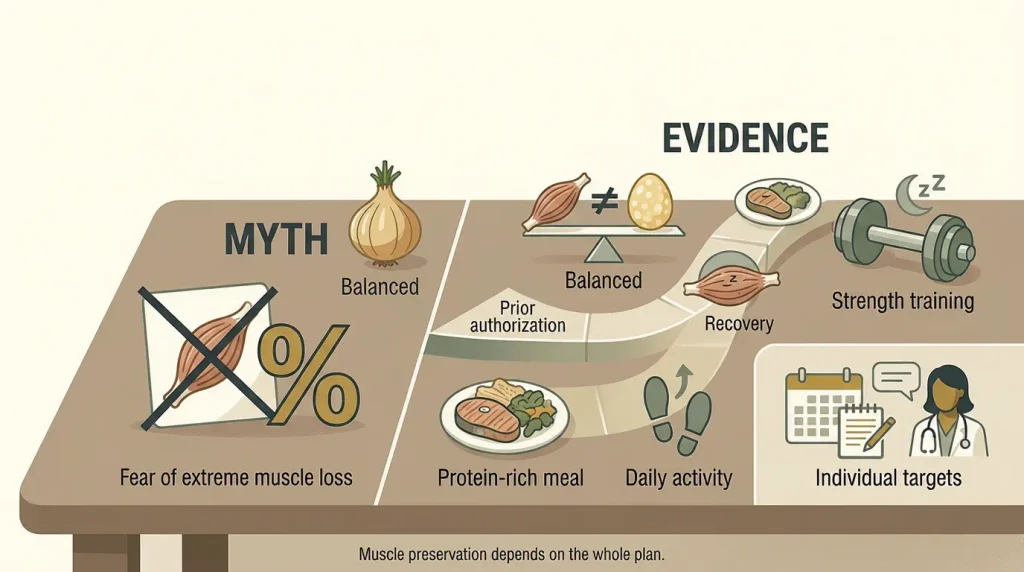
Most fear about GLP-1 and muscle loss traces back to a few repeated claims. Here is what holds up.
Myth: Forty Percent of the Weight You Lose Is Muscle
Reality: That figure comes from trials that measured lean mass, not skeletal muscle, in patients who were given no protein target and no resistance training. Lean mass includes water and organ tissue. When training and adequate protein are added, the split shifts clearly toward fat.
Myth: GLP-1 Medications Attack Muscle Tissue
Reality: No mechanism has been shown where these drugs act on muscle directly. Lean tissue loss tracks your calorie deficit, your protein intake and your activity level. The medication changes those three things through appetite, not through your muscle.
Myth: You Need One Gram of Protein Per Pound of Body Weight
Reality: That rule was written for lean athletes. At a higher starting weight it produces a target most patients cannot reach on a reduced appetite, so they give up entirely. Clinicians scale protein to lean body mass or goal weight instead, which is why how much protein on a GLP-1 has no single public answer.
Myth: Protein Must Be Eaten Within Thirty Minutes of Training
Reality: The anabolic window as usually described is outdated. Your daily total and how evenly you spread it across meals matter far more. This is good news if nausea makes a post workout shake impossible.
Myth: BCAAs and HMB Protect Muscle During Weight Loss
Reality: Neither shows strong benefit in healthy adults eating enough complete protein. Creatine monohydrate has better support and costs far less, though it should be discussed with your provider first if you have kidney concerns.
Myth: Cardio Burns the Muscle You Are Trying to Keep
Reality: Cardio only interferes at high volumes with poor recovery. At normal amounts it supports heart health and adds daily energy use without threatening lean tissue.
Myth: You Cannot Build Muscle in a Calorie Deficit
Reality: New lifters, returning lifters and patients starting at higher body fat often gain strength and some muscle in the first months. This also explains a stalled scale that is actually progress.
Myth: High Protein Damages Your Kidneys
Reality: In people with normal kidney function, evidence does not support this. In chronic kidney disease it is a real concern, which is exactly why protein targets belong in a medical visit rather than a search result.
How to Prevent Muscle Loss on GLP-1 Medications
There are five habits that work together to prevent muscle loss with GLP-1 medications: getting enough protein, engaging in resistance exercise, a healthy rate of weight loss, sufficient total nutrition and honest tracking.
Prioritize Adequate Protein Intake
Protein provides amino acids which help rebuild muscle tissue on a daily basis. As you shed pounds, needs actually increase, not decrease, at the very time that you have the least appetite.
Some sources of protein-rich foods to build meals around are eggs, Greek yogurt, cottage cheese, fish, chicken, lean beef, tofu, tempeh, beans and lentils.
The distribution of protein throughout the day is more important than one might imagine. Three to four moderate meals are better for muscle maintenance than just one big evening meal, as amino acids cannot be stored for later use.
If you don’t feel like eating, start with protein. Choose it as an appetizer, before the filling meal.
There are a lot of individual differences. The correct target will vary according to body size, age, activity level, training experience, kidney function and other medical conditions, making one number appropriate for one patient and quite inopportune, if not harmful, for another. Searches for prevent muscle loss GLP-1 advice often return a single universal figure and that figure was not written for your body.
Perform Resistance Training Regularly
Strength training is the signal that tells your body the muscle is still needed. Nothing in your diet replaces it.
- Train two or three times weekly rather than chasing daily sessions
- Cover major muscle groups: legs, back, chest, shoulders and core
- Use progressive overload, adding a little weight, a rep or a set over time
- Start with squats to a chair, assisted rows, push ups on an incline and machine based movements if you are new
- Choose consistency over intensity, since eight easy months beat three hard weeks
Avoid an Excessively Aggressive Calorie Deficit
Undereating dramatically feels productive and works against you. A moderate deficit maintains training performance, spares lean tissue and keeps you well nourished for recovery between training sessions.
The only time it is a reason for celebration is if you have not lost weight as quickly as you thought.
Stay Physically Active
Different activity types serve different purposes:
- Resistance training builds and preserves muscle directly
- Walking adds daily energy expenditure without interfering with recovery
- Cardio supports heart health, endurance and blood pressure
- Daily movement such as stairs, chores and standing keeps overall activity from collapsing
Monitor Strength as Well as Body Weight
The scale cannot tell fat from muscle, so it is a poor sole judge of progress. Track a few other things:
- Muscle strength and whether your working weights hold or climb
- Exercise performance, including reps completed and recovery between sessions
- Weight trends over weeks instead of daily readings
- Body measurements such as waist and hip circumference
- Body composition monitoring when it is clinically appropriate and available
Falling strength alongside falling weight is the signal that matters. That combination deserves a conversation with your provider, since it is the clearest sign that GLP-1 muscle loss prevention needs attention.
GLP-1 Agonists, Muscle Loss Prevention, Resistance Training & Protein Intake
Long search phrases like GLP-1 agonists muscle loss prevention resistance training protein intake turn up constantly and the phrasing accidentally gets it right. Those elements belong together, because neither one works well alone.
Why Resistance Training Is Important
Training is the only input that directly tells your body to keep muscle. Diet supplies materials, but exercise supplies the instruction.
The research evidence for weight loss is consistent that resistance training will retain significantly more lean mass than dieting alone and will increase strength even when body weight is lost.
Why Protein and Resistance Training Work Together
Training creates the stimulus for repair and protein delivers what repair requires. Do one without the other and results suffer in both directions.
Train without adequate protein and recovery stalls. Eat plenty of protein without training and the amino acids have no clear job to do.
Building a Sustainable GLP-1 Exercise Routine
Consider muscle preservation like a pyramid built up from the bottom:
- Adequate overall nutrition forms the base
- Consistent protein intake sits directly above it
- Resistance training two or three times weekly comes next
- Recovery and sleep support everything below them
- Medical monitoring sits at the top, adjusting the plan as your body changes
Begin with two 30-minute lessons a week. That is enough to protect meaningful strength and it survives busy weeks in a way an ambitious program never does. GLP-1 muscle loss prevention is effective over months, not days, thanks to consistency.
What to Do if Your Appetite Makes It Difficult to Eat Enough Protein
Practical adjustments help more than willpower:
- Eat more often but less at a time
- Have prepared easy snacks on hand: yoghurt, cheese sticks, hard-boiled eggs, jerky, edamame
- Consume some protein in your mouth if chewing is difficult
- Drink some of your protein when chewing feels like too much
- Track intake for a few days to see where you actually land, since most people overestimate
When to Ask a Dietitian or Healthcare Provider for Help
Call if weight loss is occurring significantly faster than anticipated, if strength is decreasing obviously, if you haven’t been able to get to your protein goal for weeks or if nausea is a problem and limiting what you can eat. These are problems that can be solved and the longer they run the harder they will be to solve. If you do not have someone to call, choosing a primary care physician comes before any of it.
What Should You Eat to Preserve Muscle on GLP-1?
The goal here is nourishment, not restriction. Eating less in one day makes GLP-1 muscle loss prevention much more challenging.
High-Protein Foods
Plan meals around foods that you like:
- Eggs and egg whites
- Greek yogurt and skyr
- Cottage cheese
- Fish, including salmon, tuna and cod
- Chicken and turkey
- Lean beef and pork
- Tofu and tempeh
- Beans, lentils and chickpeas
Protein-Rich Snacks for a Lower Appetite
Little makes big. Cheese sticks, a few edamame, a hard-boiled egg, roasted chickpeas, jerky or half a protein shake will all add up over the course of the day without causing you to fill up too quickly.
Include Nutrient-Dense Carbohydrates and Healthy Fats
Although protein is on everyone’s radar, carbohydrates are important for training sessions and fats for hormone production. Oats, fruit, potatoes, rice, olive oil, avocado and nuts all get their stripes.
When exercising on a low-calorie intake with an overly strict cutting phase, it’s likely to have a negative effect. Your workouts suffer first and workout quality is what protects muscle.
Smaller Meals May Be Easier to Tolerate
The volume becomes the rate-limiting factor when stomach emptying is slowed. Often four small meals provide more nutrition than three large ones that are not consumed.
What to Do if Nausea Makes Eating Difficult
Most patients find cold foods, bland foods and a slower eating pace helpful. Avoid fatty or fried foods when not feeling well, avoid eating large amounts of food at the same time, make sure to drink fluids throughout the day and inform your provider if you are unable to take in enough fluids for several days.
How Much Protein Do You Need on a GLP-1?
There is no single correct number and any source giving you one without knowing your health history is guessing.
Why Protein Needs Vary
Your requirement depends on:
- Body size, since needs generally scale with lean body mass
- Age, because older adults typically need more to achieve the same effect
- Activity level and how much you train
- Training status, as newer lifters and experienced ones respond differently
- Weight loss goals and how aggressive your deficit is
- Kidney health, which can require a lower and carefully supervised intake
- Other medical conditions affecting digestion or metabolism
How to Spread Protein Across the Day
Distribution beats concentration. Aim for a meaningful protein serving at each meal rather than loading it all into dinner, since muscle protein synthesis responds to regular delivery through the day.
Should You Use Protein Shakes?
They are a reasonable tool when appetite is limited, not a requirement. A shake is easier to finish than a chicken breast on a nauseous afternoon and whey, casein, soy and pea options all work.
Whole foods still deserve priority when you can manage them, since they bring fiber and micronutrients along with the protein.
When to Discuss Protein Intake With a Healthcare Professional
Anyone with kidney disease, liver disease or a history of gout should confirm a target with their provider before increasing intake. The same applies if you are unsure whether you are eating enough overall, which is more common on these medications than eating too much.
Why Your Body Composition Scan May Overstate Muscle Loss
Many patients panic at a scan result before checking how the scan was taken. GLP-1 muscle loss prevention starts with knowing what the number on the printout actually measures.
What a Lean Mass Reading Includes
Lean mass is everything in your body that is not fat. That means muscle, but also water, glycogen, blood volume, connective tissue and organ mass. A smaller body needs less of all of it. So part of every lean mass drop is normal shrinkage, not lost strength.
Why Scan Conditions Change the Number
Bioimpedance devices, including clinic units and home smart scales, estimate body composition by sending a current through body water. When you are low on fluids, the device reads less lean mass and more body fat. Nausea and reduced drinking are common early on a GLP-1, so many patients scan dehydrated and see a false muscle drop on the same body they had last week.
How to Scan So Your Results Compare
Use one device only. Never compare a home scale to a clinic DEXA. Scan at the same time of day, fasted, normally hydrated, before training rather than after, and not after a sauna or alcohol. Skip the week one baseline if you can, since starting glycogen and sodium levels distort it. A better starting point is week four to six. Wait for a third reading before changing anything, because two points make a line and three make a trend. If you plan to take creatine, start it before your baseline. It raises body water and lean mass readings without adding that much muscle.
The Strength Check That Outranks the Scan
Function is the more honest signal. Track your working weights, your reps at the same load, how fast you can rise from a chair five times and your grip strength. If a scan says muscle is falling but your squat load held and your chair test improved, trust the function. If both fall together, bring it to your provider. Physician supervised weight management with an in house lab gives you standardized measurements that a bathroom scale cannot.
Advanced Muscle Preservation: When Standard Advice Backfires
This section assumes you already have protein and training in place. These are the variables that change the plan.
Dose Titration Is a Tool, Not a Calendar
Most patients assume the dose climbs on schedule. It does not have to. If protein intake collapses or strength drops, holding the current dose or extending the interval is a legitimate way to protect muscle. The tradeoff is slower weight loss in exchange for keeping the tissue you came for. Only a supervising physician can make that call.The right treatment approach also depends on whether someone is an appropriate candidate for weight loss medication.
Train Around Your Injection Cycle
Appetite, nausea and energy are often worse in the first two to three days after a dose. Put your resistance sessions and your highest protein meals in the back half of the cycle. Choose an injection day that protects your training days. This costs nothing and changes what you can actually complete each week.
Adults Over Sixty Five Need a Different Plan
Older adults respond less to the same amount of protein, so needs rise exactly when appetite falls hardest. Bone density also falls alongside weight, which makes fracture and fall risk the outcome that matters most. For this group, a slower pace and a held dose often beat a faster result that looks better on paper.
When Higher Protein Is the Wrong Advice
Chronic kidney disease at stage three or above, active gout and some liver conditions all require a supervised protein target rather than a higher one. These conditions appear often in the same patients being treated for metabolic disease, so the standard advice needs medical override, not adjustment.
Falling Strength Is a Differential Diagnosis
Statin related muscle symptoms, untreated thyroid disease, low vitamin D, iron deficiency, anemia, low testosterone, poor sleep and simple dehydration all look like GLP-1 muscle loss. Labs separate them. If nobody has run baseline labs, nobody can tell which one you have. An in house lab means those labs get run during the visit rather than at a separate appointment.
Plan Maintenance Phases Before You Need Them
A deliberate two to four week period at maintenance calories, used when strength stalls rather than after it drops, restores training quality and protects lean tissue. The same applies at the end. Plan the step down to a maintenance dose with your provider so the muscle you protected survives the transition.
Medical Weight Loss Services We Provide at LIV MED
Patients across Arlington and the Dallas Fort Worth area often begin treatment somewhere that tracks nothing but weight. LIV MED takes a fuller view. Dr. Nadeen Soederbaum reviews labs, monitors how weight loss is progressing and adjusts the plan when the pace or the pattern suggests it should change.
In our medical weight loss we provide physician supervised medical weight management, including eligibility evaluation, baseline labs, prescription options, nutrition guidance built around protein and strength and ongoing monitoring
Nutrition guidance and GLP-1 muscle loss prevention are built into treatment here rather than left to the patient to figure out alone. An in house lab with Quest Diagnostics support, same day appointments, telemedicine visits, bilingual Spanish speaking staff and most major insurance plans keep care accessible. Patients searching how to not lose muscle on GLP-1 benefit most from a provider watching the whole picture rather than a single number.
Conclusion
Some lean mass comes off during meaningful weight loss and that is expected. Lean mass and skeletal muscle are not the same measurement, so the alarming figures circulating online overstate how much actual muscle is at stake.
Taking a GLP-1 receptor agonist does not make muscle loss inevitable and GLP-1 muscle loss prevention is largely a matter of habits rather than luck. Protein and resistance training sit at the center of protecting it and both become harder if you also restrict your diet severely, which is why extreme approaches undermine the goal.
Watch strength and body composition alongside the scale, since those tell you what kind of weight you are losing. Needs differ from person to person and a provider who monitors your progress can adjust the plan long before a small problem becomes a lasting one.