

Newborn Fighting Sleep: Causes, Calming Tips and When to Call a Doctor
Knowing what to do when newborn fights sleep starts with checking common causes like hunger, gas, overtiredness, or day-night confusion. Feed and burp your baby, watch for early sleepy cues, and use calming methods like swaddling, white noise, rocking, or a pacifier. Keep nights quiet and dark, and always place your baby on their back in an empty crib or bassinet.
Most newborns who fight sleep are going through a normal phase that improves by three to four months. Call your doctor right away if a baby under 3 months has a fever of 100.4°F (38°C) or higher, feeds poorly, or cries for hours and cannot be soothed. For breathing trouble or a baby who is hard to wake, call 911. This guide covers why newborns fight sleep, what changes by age, and when sleep trouble may point to a medical concern.
Why Do Newborns Fight Sleep
Babies do not fight sleep on purpose. Crying and squirming at bedtime is how a newborn tells you something feels off. These are the most common causes.
Overtired Infant Won’t Sleep
It sounds backward, but a baby who stays awake too long often has a harder time falling asleep. When tired babies push past their limit, their bodies release stress hormones like cortisol. An overtired infant won’t sleep easily and may cry harder the more you try to settle them.
Hunger and Cluster Feeding
Newborns have tiny stomachs and need to eat every two to three hours. Many babies also cluster feed in the late afternoon and evening. This means they want to eat again and again over a few hours. A baby who is still hungry will keep fighting sleep until their belly feels full.
Gas and Tummy Discomfort
Babies swallow air while they feed and cry. Trapped gas can make it hard for them to relax. Some babies also spit up often, which is called reflux. Burping during and after feeds and holding your baby upright for a bit after eating can help.
Day and Night Mix-Up
In the womb, your movement during the day rocked your baby to sleep. At night, when you lay still, they become more active. Many newborns keep this pattern after birth. Their body clock is not ready yet, so they may sleep all day and stay alert at night. Busy, bright evenings with visitors or screens can make this worse.
What Normal Newborn Sleep Looks Like
Knowing what healthy newborn sleep looks like can ease a lot of worry. Newborns sleep about 14 to 17 hours a day, but in short stretches. Their sleep cycles last around 50 minutes, which is much shorter than an adult’s. About half of that time is spent in active sleep, which is lighter and noisier than deep sleep. If you are ever unsure, your baby’s regular checkups through primary care services are a good time to ask whether their sleep is on track.
Why an Infant Screams in Sleep
During active sleep, babies twitch, grunt, whimper and sometimes cry out. Their eyes may move under the lids and their breathing may speed up and slow down. If your infant screams in sleep for a few seconds, they are often still asleep. Pause for a minute or two before you pick them up. Rushing in can wake a baby who was about to drift back on their own.
Short Naps Are Normal at First
Many parents worry when naps last only 30 or 40 minutes. This is often just one sleep cycle. Young babies have not yet learned to link one cycle to the next. Longer naps usually come with time as the brain matures.
Baby Fighting Sleep by Age
The reasons behind sleep struggles often change as your baby grows. Knowing which stage your baby is in can help you pick the right fix. Here is what to expect in the first three months.
Newborn Fighting Sleep in the First Six Weeks
In the early weeks, most sleep trouble comes from hunger, gas and day-night confusion. Crying also increases during this time and often peaks around six weeks of age. Many babies have a fussy stretch in the evening, which is why some parents feel their newborn fights sleep every night. This usually eases by three to four months.
2 Month Old Fighting Sleep
At two months, babies become more social. This new awareness can make it harder to switch off. A 2 month old fighting sleep often needs a calmer, darker space and a little more time to wind down than before.
3 Month Old Fighting Sleep
Around three months, your baby’s body clock begins to form. They start to make more of their own melatonin, the hormone that signals sleep. Babies this age also get distracted during feeds and may not eat fully. A 3 month old fighting sleep may simply be hungry or ready for a slightly longer awake time.
What to Do When Your Newborn Fights Sleep
Once you have a guess about the cause, these steps can help your baby settle. Try one or two changes at a time so you can see what works. Give each change a few days before you judge it.
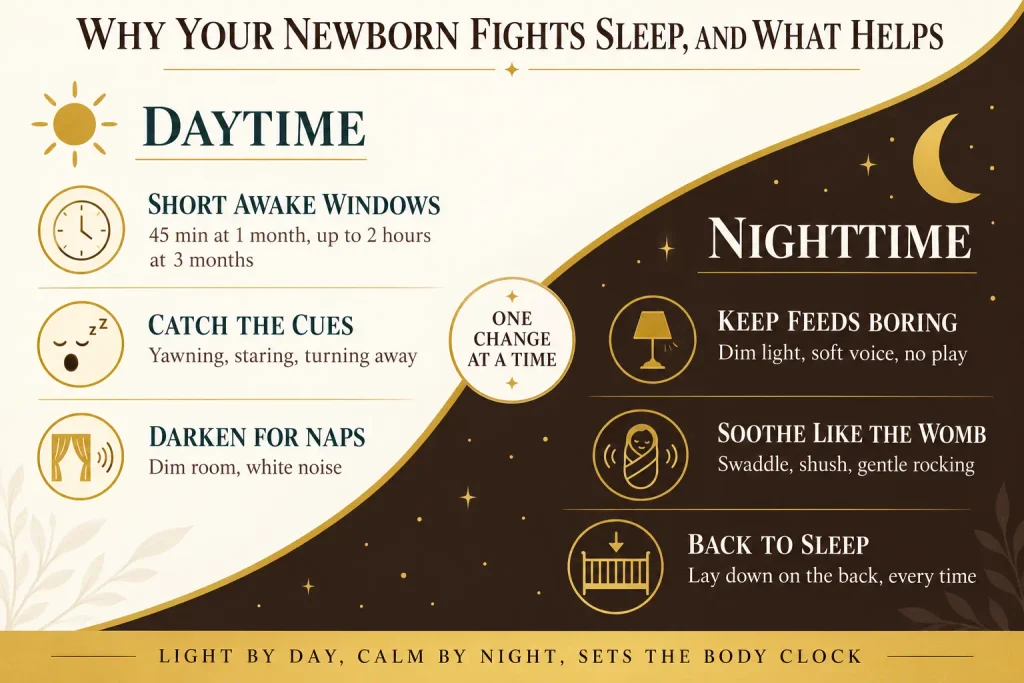
Watch the Clock and the Cues
Newborns can only stay awake for a short time. Putting your baby down before they get overtired makes it easier for them to fall asleep.
Awake Times by Age
Most babies are ready to sleep after these stretches of awake time:
- First month: 45 to 60 minutes
- Two months: 60 to 90 minutes
- Three months: up to two hours
Early Sleepy Cues
Watch for yawning, staring into space and turning away from faces. Start a short routine as soon as you see them, such as a diaper change, a feed and a song in a dark room.
Try Calming Moves That Feel Like the Womb
Many babies calm down with things that remind them of the womb. Snug swaddling, steady shushing or white noise, gentle rocking and sucking on a pacifier can all help. Holding your baby on their side or tummy while you soothe them is fine. Once they are calm, always lay them down on their back.
Help a Baby Fighting Naps
Naps can be harder than night sleep because the house is brighter and busier. Try naps in a darker room with white noise. If your baby fights naps in the crib, a contact nap in your arms is fine while you are awake and alert. Aim for at least one nap a day in the crib or bassinet so they get used to it.
How to Stop Newborn From Crying at Night
Keep night feeds calm and boring. Use a dim light, speak softly, skip play and change diapers only when needed. During the day, open the curtains and let your baby see natural light. This contrast helps set their body clock. Over time, nights get longer and quieter.
Safe Sleep Still Comes First
A tired parent may be tempted to try anything that works. Some products and habits raise the risk of sudden infant death syndrome (SIDS), which is the sudden and unexplained death of a baby during sleep. The American Academy of Pediatrics advises placing babies on their back on a firm, flat surface with only a fitted sheet. Keep pillows, blankets, bumpers and toys out of the sleep space.
The AAP also recommends these steps to keep sleep safe:
- Avoid inclined sleepers, car seats and swings for routine sleep.
- Skip weighted sleep sacks and weighted swaddles, which are not considered safe.
- Stop swaddling as soon as your baby shows signs of trying to roll, which can happen around two months.
- Share a room, but not a bed, for at least the first six months.
When Newborn Fighting Sleep Is a Medical Concern
Most sleep battles are a normal part of growing. But sometimes a baby who won’t sleep is telling you they are sick or in pain. Learning the warning signs helps you act fast when it matters.
Warning Signs to Watch For
Call your family doctor right away if your baby has any of these signs.
- A fever of 100.4°F (38°C) or higher in a baby under 3 months old
- Fewer than six wet diapers a day after the first week
- Poor feeding, weak sucking or refusing feeds
- A high-pitched cry or crying that cannot be soothed for hours
- Fast or hard breathing, or bluish lips
- Forceful or green vomiting, or blood in the stool
- Yellow skin or eyes, or a baby who is hard to wake
A fever in a young infant always needs medical care the same day, even if the baby seems fine otherwise. For breathing trouble or a baby who will not wake up, call 911 or take your baby to the nearest hospital right away.
Colic and Other Hidden Causes
Colic means crying for more than three hours a day, at least three days a week, for three weeks or more in a healthy baby. It is common and usually fades by three to four months. Reflux that causes pain, poor weight gain or feeding refusal should be checked by a family doctor. A milk protein allergy can also cause fussiness, rash, mucus or blood in the stool.
If your baby seems uncomfortable most of the day, a sick visit can help find the cause. Bring notes on feeding times, diapers and crying spells. These details help your doctor spot patterns quickly.
Take Care of Yourself Too
Caring for a baby who fights sleep every night is exhausting. Sleep loss can affect your mood, patience and health. If you feel angry or overwhelmed, place your baby safely on their back in the crib and step away for a few minutes. Never shake a baby, since shaking can cause serious brain injury in seconds.
Many new parents feel sad, anxious or numb in the weeks after birth. The baby blues often fade within two weeks. Feelings that last longer or get worse may be postpartum depression, which is common and treatable in both mothers and fathers. If you’re having a hard time, consider reaching out for mental health care and support.
How LIV MED Supports Families Through Newborn Sleep Struggles
Most of the time, a newborn fighting sleep is a normal phase that improves with time, routine and a safe, calm sleep space. It is time to see a doctor when crying cannot be soothed, feeding drops off, a fever appears or something simply feels wrong. You know your baby best, and your concerns deserve a real answer.
At LIV MED in Arlington, Dr. Nadeen Soederbaum is board certified by the American Board of Family Medicine. We care for every member of the family, from newborns to grandparents, so your whole household can get support in one place. Our primary care services include sick visits for babies, preventive care and follow-up for ongoing health concerns. We also help new parents manage sleep loss, stress and postpartum mood changes.
Same-day appointments and telemedicine visits make it easier to get answers when you are running on little sleep. Our in-house lab supports testing when it is needed, and our bilingual staff speaks Spanish. If you are still unsure what to do when your newborn fights sleep, call LIV MED or schedule a visit today.